Pāhāraki – Coronet Peak
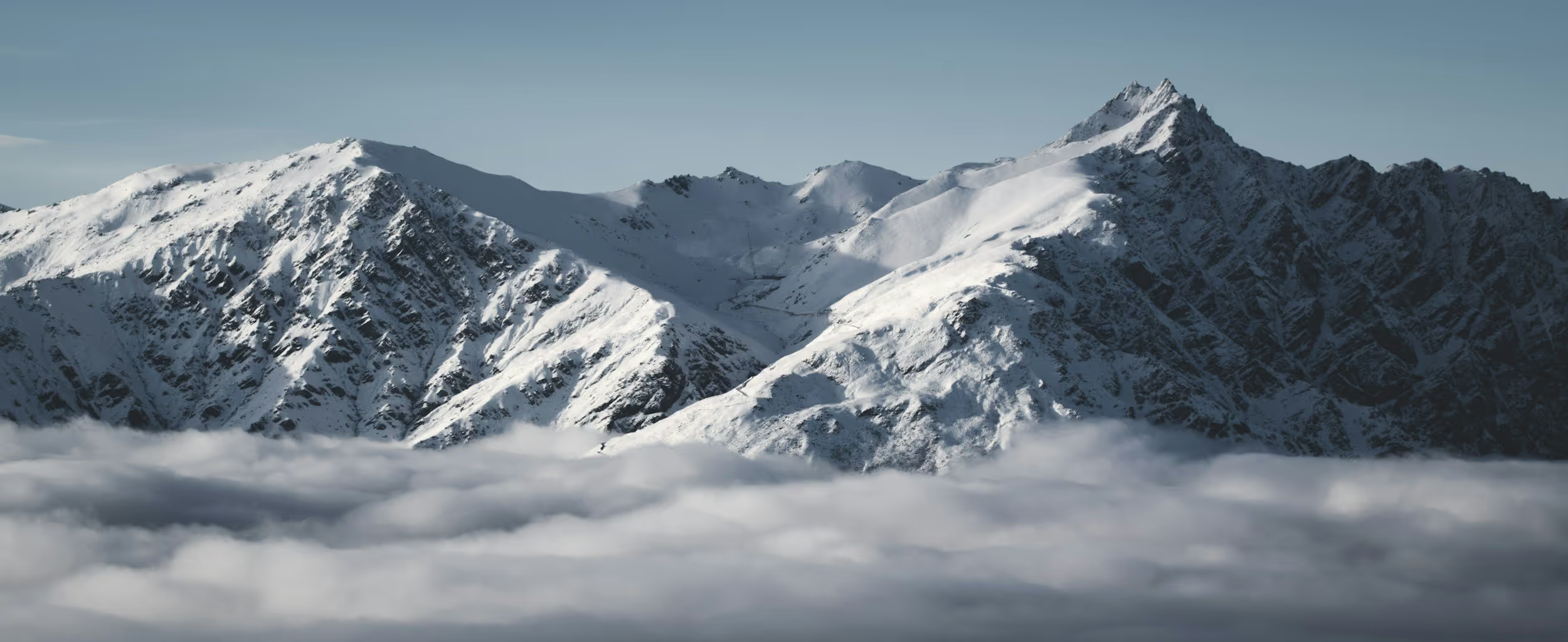
To the north of Queenstown and visible from many parts of the district is Coronet Peak. This majestic peak world famous for its ski slopes is known to Māori as Pāhāraki.
The name talks of the Māori creation story, that the South Island was a waka/ canoe that turned to stone and the four brothers in the canoe also turned to stone and became what we know as the Southern Alps.
The oldest brother famously known as Aoraki or Mount Cook. In the Māori creation story, we acknowledge Rakinui (sky father) and Papatūānuku (earth mother). Papatūānuku came to the area and saw that the mountains to the north of the lake and the area now known as Queenstown was stunningly beautiful but the mountains to the west were just a solid mass of rock. Wanting to make the area more beautiful than it was, Earth mother (Papatūānuku) called her husband Rakinui down from the heavens.
It was Papatūānuku who came down from the heavens to shape the mountains to the Southwest of Queenstown to give it the beauty we appreciate today. The place where he entered the earthly realm and his breath was first felt is known as Pāhāraki/ Coronet Peak.
Pa means place and ha means breath and raki is the Ngāi Tahu name for Ranginui or sky father.
Kawarau – Remarkables Ski Field
As we look to the Southeast, the first mountain/ mauka that captures our view and the first to greet us is the significant Remarkables Mountain Range. To local iwi/ tribe (Ngāi Tahu) this mountain is known as Kawarau named after a Rangatira a chief who was one of the first to come to the area and took in the outstanding beauty of the area. Wanting to ensure the area would always be forever highly regarded, to achieve this he turned himself into the mountain we know today as the Remarkables/ Kawarau.
Because of his high status in the Ngāi Tahu tribe genealogy, the river at his feet was also called Kawarau.
For one of the earlier tribes the name they gave to the Remarkables Mountain was Tapuae Uenuku. When they viewed the mountain, they watched as the face changed colours during the day, and they believed that the mountain was the stairway to the home of Uenuku the Māori god of rainbows. This has been recognised in that the highest peak at the end of the Remarkables which sits above Wye Creek has the name Tapuae Uenuku.
Tapuae – sacred footsteps
Uenuku – Atua/ God of rainbows.
The wider area at the base of Coronet Peak/ Pāhāraki stretching from Arrowtown to Arthurs Point is known as Wharehuanui.
Whare – area of activity
Hua – abundance of smell or fragrance
Nui – Many or a lot of
In times of old the Māori villages use to come to this area and harvest the Taramea plant (Spanish speargrass). They would collect the sharp bulb spears and then on open fires they would suspend the bulbs and by early morning had extracted a beautiful smelling oil. That was highly valued by Māori and was only allowed to be worn by people of Chiefly or Royal status. To this day it is traded under the Brand name Mea.
To the north of Queenstown and visible from many parts of the district is Coronet Peak. This majestic peak world famous for its ski slopes is known to Māori as Pāhāraki.
The name talks of the Māori creation story, that the South Island was a waka/ canoe that turned to stone and the four brothers in the canoe also turned to stone and became what we know as the Southern Alps.
The oldest brother famously known as Aoraki or Mount Cook. In the Māori creation story, we acknowledge Rakinui (sky father) and Papatūānuku (earth mother). Papatūānuku came to the area and saw that the mountains to the north of the lake and the area now known as Queenstown was stunningly beautiful but the mountains to the west were just a solid mass of rock. Wanting to make the area more beautiful than it was, Earth mother (Papatūānuku) called her husband Rakinui down from the heavens.
It was Papatūānuku who came down from the heavens to shape the mountains to the Southwest of Queenstown to give it the beauty we appreciate today. The place where he entered the earthly realm and his breath was first felt is known as Pāhāraki/ Coronet Peak.
Pa means place and ha means breath and raki is the Ngāi Tahu name for Ranginui or sky father.
Kawarau – Remarkables Ski Field
As we look to the Southeast, the first mountain/ mauka that captures our view and the first to greet us is the significant Remarkables Mountain Range. To local iwi/ tribe (Ngāi Tahu) this mountain is known as Kawarau named after a Rangatira a chief who was one of the first to come to the area and took in the outstanding beauty of the area. Wanting to ensure the area would always be forever highly regarded, to achieve this he turned himself into the mountain we know today as the Remarkables/ Kawarau.
Because of his high status in the Ngāi Tahu tribe genealogy, the river at his feet was also called Kawarau.
For one of the earlier tribes the name they gave to the Remarkables Mountain was Tapuae Uenuku. When they viewed the mountain, they watched as the face changed colours during the day, and they believed that the mountain was the stairway to the home of Uenuku the Māori god of rainbows. This has been recognised in that the highest peak at the end of the Remarkables which sits above Wye Creek has the name Tapuae Uenuku.
Tapuae – sacred footsteps
Uenuku – Atua/ God of rainbows.
The wider area at the base of Coronet Peak/ Pāhāraki stretching from Arrowtown to Arthurs Point is known as Wharehuanui.
Whare – area of activity
Hua – abundance of smell or fragrance
Nui – Many or a lot of
In times of old the Māori villages use to come to this area and harvest the Taramea plant (Spanish speargrass). They would collect the sharp bulb spears and then on open fires they would suspend the bulbs and by early morning had extracted a beautiful smelling oil. That was highly valued by Māori and was only allowed to be worn by people of Chiefly or Royal status. To this day it is traded under the Brand name Mea.
Waipuna/ Lake Johnson
Directly south from Coronet Ridge Resort, Waipuna comes from the name of the lake above the site. It is said to have been linked to the Māori name for Queenstown Hill (Te Tapu nui – The place of great sacredness). Whatever the name refers to, it is said that the Lake was used by Māori to cleanse themselves. Waipuna – water that pools.
The wider area is known as Te kirikiri/ Frankton which Murihiku elder Michael Skerrett explains describes the sound the Waka make as they scraped on the shingle as they came into the beach. Te kirikiri was a waka landing and a place of great activity during the harvesting season. Te kirikiri and the wider area was where the Ngāi Tahu tradition of Mahika Kai (Mahinga Kai) occurred during the warm summer months.
The site looks across to the Remarkables Range or Kawarau as known by Ngāi Tahu. In Māori legend Kawarau was a chief who came to the area and so moved by the beauty of the area that he turned himself in to a Mountain, so the area always had mana (prestige and authority). Because of his status as a chief the river at his feet was also called Kawarau.
In the time of Ngāti Māmoe the tribe who settled this area before the arrival of Ngāi Tahu lived a famous fighting chief called Tuwiriroa and in the area below the Remarkables mountain was his village of Tititea. He was the chief that ruled over this area including Te Kirikiri.
Below the Resort lies the Kimi Akau (Shotover River). Ngāi Tahu tell the story of a giant Rakaihautu who walked the island and created the cold-water lakes. The legend tells of him resting here and then with his mighty digging stick created the lake known as Whakatipu. He named many features through to the west coast with the name Whakatipu and when Māori came to the area, they thought that they could travel to the coast following the Lake, but found they were blocked by Mountains. They then followed up the river adjacent the site and named it Kimi akau. Which means “Looking for the Coast”
Whakatipu, although the correct use of the name is lost to time, it is believed that it referred to over hundreds of years that our ancestors would arrive for the warm harvesting season (Mahinga Kai) gathered around the wetlands and waterways and as well as harvesting they would come together to uplift themselves through knowledge and wellness. Because of the migration for the warm months many Ngāi Tahu chiefs were born in this area. The lake now known as Wakatipu is also known to Māori as Whakatipu wai-māori which literally means to Raise Gather and grow by the fresh water (wai-māori -ordinary water) lake and Lake McKerrow on the West Coast is a saltwater lake and is known as Whakatipu wai-tai, to raise gather and grow by the saltwater lake.
Directly south from Coronet Ridge Resort, Waipuna comes from the name of the lake above the site. It is said to have been linked to the Māori name for Queenstown Hill (Te Tapu nui – The place of great sacredness). Whatever the name refers to, it is said that the Lake was used by Māori to cleanse themselves. Waipuna – water that pools.
The wider area is known as Te kirikiri/ Frankton which Murihiku elder Michael Skerrett explains describes the sound the Waka make as they scraped on the shingle as they came into the beach. Te kirikiri was a waka landing and a place of great activity during the harvesting season. Te kirikiri and the wider area was where the Ngāi Tahu tradition of Mahika Kai (Mahinga Kai) occurred during the warm summer months.
The site looks across to the Remarkables Range or Kawarau as known by Ngāi Tahu. In Māori legend Kawarau was a chief who came to the area and so moved by the beauty of the area that he turned himself in to a Mountain, so the area always had mana (prestige and authority). Because of his status as a chief the river at his feet was also called Kawarau.
In the time of Ngāti Māmoe the tribe who settled this area before the arrival of Ngāi Tahu lived a famous fighting chief called Tuwiriroa and in the area below the Remarkables mountain was his village of Tititea. He was the chief that ruled over this area including Te Kirikiri.
Below the Resort lies the Kimi Akau (Shotover River). Ngāi Tahu tell the story of a giant Rakaihautu who walked the island and created the cold-water lakes. The legend tells of him resting here and then with his mighty digging stick created the lake known as Whakatipu. He named many features through to the west coast with the name Whakatipu and when Māori came to the area, they thought that they could travel to the coast following the Lake, but found they were blocked by Mountains. They then followed up the river adjacent the site and named it Kimi akau. Which means “Looking for the Coast”
Whakatipu, although the correct use of the name is lost to time, it is believed that it referred to over hundreds of years that our ancestors would arrive for the warm harvesting season (Mahinga Kai) gathered around the wetlands and waterways and as well as harvesting they would come together to uplift themselves through knowledge and wellness. Because of the migration for the warm months many Ngāi Tahu chiefs were born in this area. The lake now known as Wakatipu is also known to Māori as Whakatipu wai-māori which literally means to Raise Gather and grow by the fresh water (wai-māori -ordinary water) lake and Lake McKerrow on the West Coast is a saltwater lake and is known as Whakatipu wai-tai, to raise gather and grow by the saltwater lake.